Classic Glazed Doughnuts (Soft, Bakery-Style Rings with Vanilla Glaze)
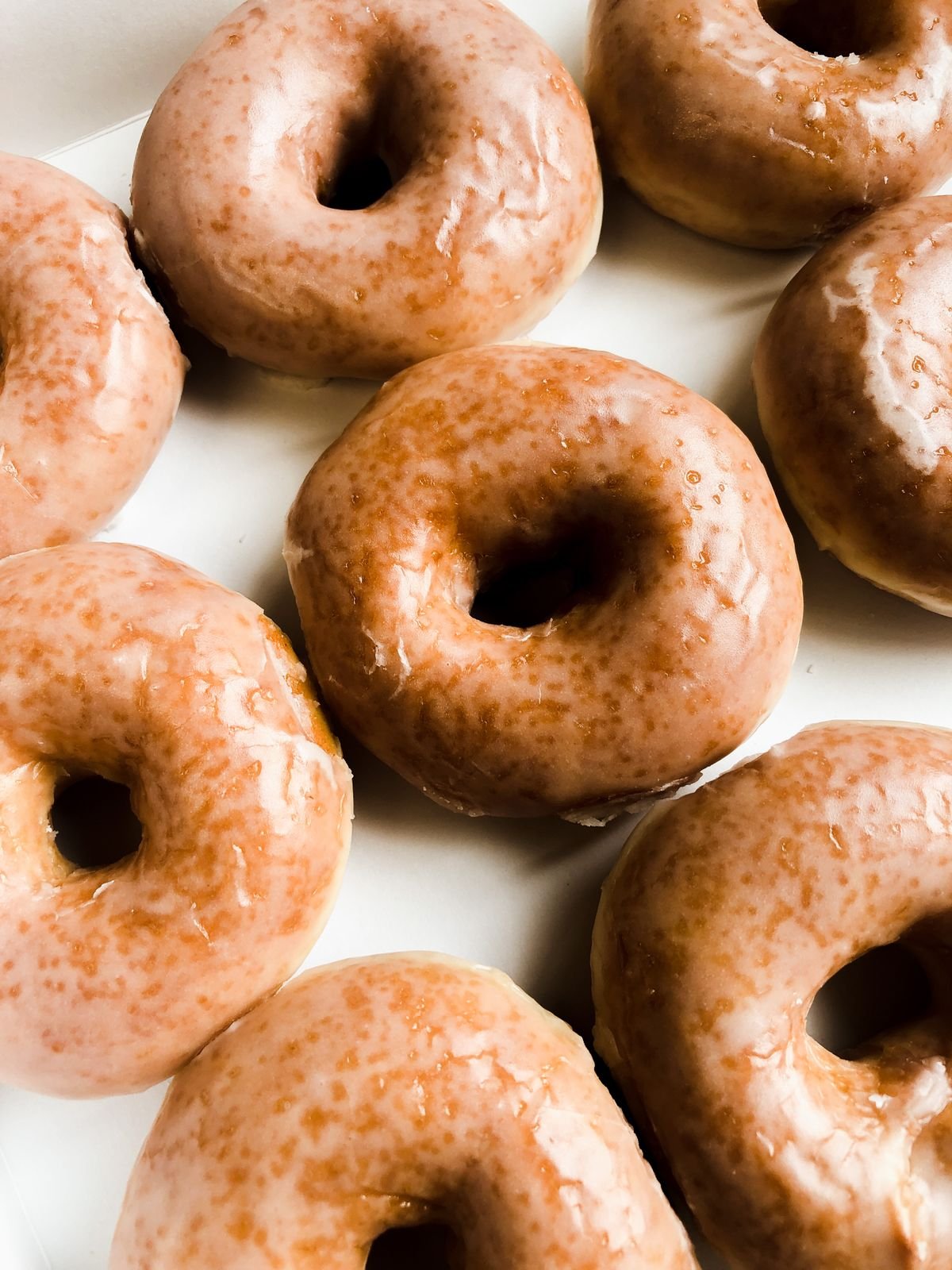
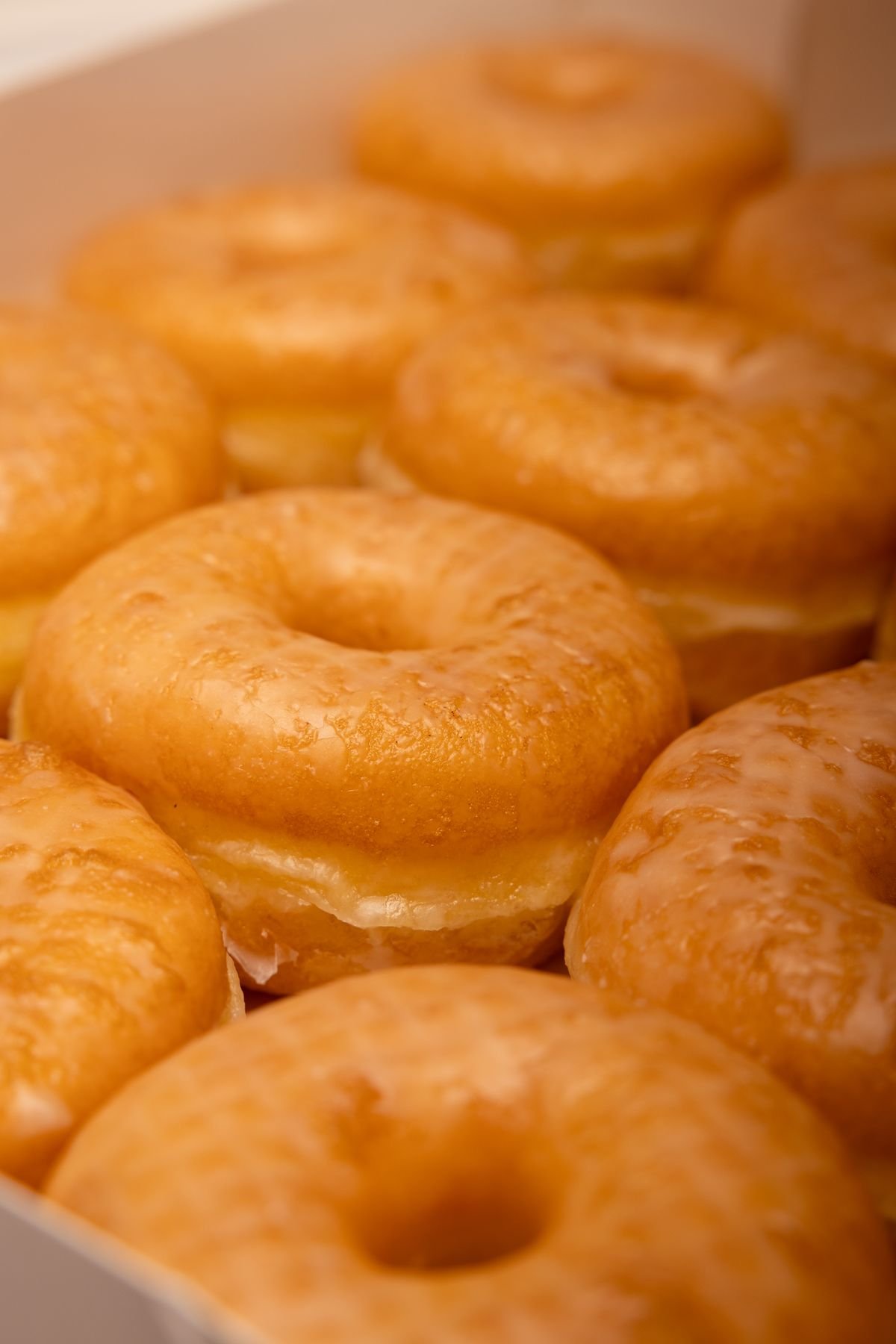
Classic glazed doughnuts are the bakery standard for a reason: a soft, airy yeast ring, fried until golden, dipped in a thin vanilla glaze that sets into a delicate crackly shell. No frosting, no sprinkles, no filling needed — just warm dough, a light fry, and that sweet glossy coat.
This is an evergreen, make-them-any-weekend recipe, and it happens to land on National Doughnut Day (Thursday, November 5 — the year’s second doughnut day; June’s is the bigger one, but a good glazed ring needs no occasion). If you like baked sweets, try our Pumpkin Spice Baked Donuts for a fall version, or our Soft & Fluffy Cinnamon Rolls for another yeast-dough favorite.

Why This Recipe Works
- Yeast dough stays soft: A properly risen yeast dough fries up light and airy with a tender crumb, never dense or bready.
- The glaze is thin on purpose: A simple powdered-sugar glaze sets into a crackly shell instead of a thick frosting — the classic bakery finish.
- Oil temperature is the whole trick: Frying at 350 degrees F (175 degrees C) gives a golden outside without a greasy inside.
- Pantry ingredients only: Flour, yeast, milk, butter, eggs, and sugar — nothing special to buy, and the dough comes together in one bowl.
Ingredients
For the dough
- 3 1/2 cups (440 g) all-purpose flour, plus more for dusting
- 1/4 cup (50 g) granulated sugar
- 2 1/4 tsp (7 g) active dry yeast (1 packet)
- 1/2 tsp fine salt
- 3/4 cup (180 ml) warm whole milk (110 degrees F / 43 degrees C)
- 1/4 cup (57 g) unsalted butter, melted and slightly cooled
- 2 large eggs, room temperature
- 1 tsp vanilla extract
- Vegetable oil, for frying (about 6 cups / 1.4 L)
For the vanilla glaze
- 2 cups (240 g) powdered sugar, sifted
- 1/4 cup (60 ml) whole milk
- 1 tsp vanilla extract
- Pinch of salt
(full list in card)
How to Make Classic Glazed Doughnuts
Step 1: Bloom the yeast
Stir the warm milk, 1 tablespoon of the sugar, and the yeast in a small bowl. Let it sit for 5 to 10 minutes until foamy. If it never foams, the milk was too hot or the yeast is dead — start over with fresh yeast and milk at 110 degrees F (43 degrees C).
Step 2: Mix and knead the dough
Whisk the flour, remaining sugar, and salt in a large bowl (or stand-mixer bowl). Add the yeast mixture, melted butter, eggs, and vanilla. Knead for 8 to 10 minutes by mixer (dough hook) or by hand on a floured surface, until smooth, soft, and slightly tacky. The dough should pull away from the bowl but still stick lightly to your fingers.
Step 3: First rise
Shape the dough into a ball, place it in a lightly oiled bowl, and cover with plastic wrap or a damp towel. Let it rise in a warm spot for about 60 minutes, until doubled in size.
Step 4: Roll and cut
Punch the dough down gently and roll it on a floured surface to 1/2 inch (1.3 cm) thick. Cut with a 3-inch (7.5 cm) doughnut cutter (or a wide glass plus a small bottle cap for the holes). Place the rings and holes on parchment squares. Re-roll the scraps once only — more than that makes tough doughnuts.
Step 5: Second rise
Cover the cut doughnuts loosely and let them rise for 30 minutes, until puffy and nearly doubled. They should spring back slowly when poked.
Step 6: Fry until golden
Heat 2 inches of oil in a heavy pot to 350 degrees F (175 degrees C), using a thermometer — guessing the temperature is how doughnuts turn greasy or raw inside. Fry 2 to 3 doughnuts at a time for 1 to 2 minutes per side, until deep golden. Lift out with a slotted spoon and drain on a wire rack for 2 minutes.
Step 7: Glaze while warm
Whisk the powdered sugar, milk, vanilla, and salt until smooth. Dip each doughnut top-side down into the glaze while still warm (not hot), let the excess drip off, and set on the rack. The glaze sets in 15 to 20 minutes. Eat one warm if you can — that is the whole point.
Tips
- Use a thermometer: Oil temperature is the difference between golden and greasy. Keep it at 350 degrees F (175 degrees C) and let it recover between batches.
- Do not crowd the pot: Frying too many at once drops the oil temperature and soaks the doughnuts with oil. Two or three at a time is right.
- Glaze warm, not hot: Fresh from the oil, the glaze slides off; fully cool, it will not stick as well. Two minutes on the rack is the sweet spot.
- Re-roll scraps once: The first re-roll is fine. After that the dough gets overworked and the doughnuts turn tough.
- Save the holes: Fry the doughnut holes for about 1 minute total — they are the cook’s treat and the kids’ favorite.
Variations
- Chocolate glaze: Replace the vanilla glaze with 1 cup (120 g) powdered sugar, 1/4 cup (25 g) cocoa powder, 1/4 cup (60 ml) milk, and 1 tsp vanilla.
- Maple glaze: Swap the milk for maple syrup and add 1/4 tsp maple extract if you have it.
- Cinnamon sugar: Skip the glaze and toss warm doughnuts in 1 cup (200 g) sugar mixed with 2 tsp cinnamon.
- Lemon glaze: Replace the milk with lemon juice and add 1 tsp lemon zest for a bright finish.
Storage
Glazed doughnuts are best the day they are made, ideally still slightly warm. Keep leftovers in an airtight container at room temperature for up to 1 to 2 days — do not refrigerate, which stales them fast. For longer storage, freeze UNGLAZED doughnuts for up to 1 month, thaw at room temperature, and glaze fresh. Do not freeze glazed doughnuts; the glaze weeps as it thaws.
Frequently Asked Questions
Why didn’t my dough rise?
The usual causes are milk that was too hot (over 120 degrees F / 49 degrees C kills yeast), dead yeast, or a cold kitchen. Check the yeast by blooming it first, keep the milk at 110 degrees F (43 degrees C), and let the bowl rise somewhere warm, like inside the oven with just the light on.
Can I bake these instead of frying?
You can, but they will not be the same doughnut — baked rings are softer and more bread-like, closer to a sweet roll. If you bake, brush with butter and bake at 375 degrees F (190 degrees C) for 10 to 12 minutes, then glaze. For the classic result, fry.
Why is my glaze too thin or too thick?
Glaze thickness is just the sugar-to-milk ratio. Too thin and runny: whisk in more sifted powdered sugar, a tablespoon at a time. Too thick and pasty: add milk a teaspoon at a time. It should coat a spoon and drip off slowly.
Can I make the dough ahead of time?
Yes. After kneading, cover and refrigerate the dough overnight (up to 24 hours). Let it come to room temperature for 30 to 45 minutes, then roll, cut, and continue with the second rise — it may need a few extra minutes since the dough starts cold.
Classic Glazed Doughnuts
Course: DessertCuisine: American12
servings20
minutes15
minutes340
kcal125
minutesIngredients
- For the dough
3 1/2 cups (440 g) all-purpose flour, plus more for dusting
1/4 cup (50 g) granulated sugar
2 1/4 tsp (7 g) active dry yeast (1 packet)
1/2 tsp fine salt
3/4 cup (180 ml) warm whole milk (110 degrees F / 43 degrees C)
1/4 cup (57 g) unsalted butter, melted and slightly cooled
2 large eggs, room temperature
1 tsp vanilla extract
Vegetable oil, for frying (about 6 cups / 1.4 L)
- For the vanilla glaze
2 cups (240 g) powdered sugar, sifted
1/4 cup (60 ml) whole milk
1 tsp vanilla extract
Pinch of salt
Directions
- Stir warm milk, 1 tablespoon sugar, and yeast; rest 5 to 10 minutes until foamy.
- Whisk flour, remaining sugar, and salt; add yeast mixture, butter, eggs, and vanilla. Knead 8 to 10 minutes until smooth and slightly tacky.
- Cover and rise about 60 minutes until doubled.
- Roll to 1/2 inch thick, cut 3-inch rings and holes; re-roll scraps once only. Rise 30 minutes until puffy.
- Fry in 350 degrees F (175 degrees C) oil, 1 to 2 minutes per side, until deep golden; drain 2 minutes.
- Whisk glaze ingredients; dip warm doughnuts top-side down and let the glaze set 15 to 20 minutes.
Notes
- Nutrition (estimated per doughnut): 340 calories, 16 g fat, 44 g carbohydrates, 1 g fiber, 22 g sugar, 5 g protein, 240 mg sodium. Values are estimates and will vary with the exact ingredients used.