Winter Hair Care (How to Repair Dry, Damaged Hair)

Winter hair care is not about buying a whole new shelf of products. Every December the same thing happens: the cold air outside turns dry, the heating inside turns drier, and within a few weeks your hair starts feeling rough, looking dull, and snapping when you brush it.
Nothing is wrong with your hair. Winter simply changes what it needs. Cold air holds less water, heated indoor air pulls moisture out of every strand, and hats, scarves, and extra heat styling add friction and breakage on top. The fix is small: a gentler wash, one weekly treatment, and a little daily protection. This routine walks through each step.
Why You’ll Love This
- Repair first, then moisture. This routine separates strength from softness, so you fix what is actually wrong instead of guessing.
- One treatment, not ten products. A single weekly mask and a single leave-in do most of the work. Everything else is a small habit change.
- Works for every hair type. Fine, curly, colour-treated, or thick, the routine adjusts with one or two swaps.
- Visible in about two weeks. Softer, shinier hair usually shows up within two weeks of a steady routine, and less breakage follows soon after.
- No salon visit required. Everything here is at-home, and the salon options are clearly marked as optional extras.
What You Need
- A gentle, hydrating shampoo, ideally sulphate-free
- A rich conditioner, used every single wash
- A deep conditioning mask or hair treatment, once a week
- A bond-building treatment, such as Olaplex No. 3 or K18, if your hair is coloured, bleached, or snapping
- A leave-in conditioner or cream for damp hair
- A hair oil or serum for the ends, such as argan or jojoba oil
- A heat protectant spray for any hot styling
- A wide-tooth comb and a soft microfibre towel or old T-shirt
- A silk or satin pillowcase, if you can get one
How to Do It
- Wash with lukewarm water. Hot water strips the oils your hair needs in winter. Keep the water warm, and put shampoo mainly on the scalp.
- Condition every wash, from the ears down. Leave conditioner on for two to three minutes, then rinse until the hair feels slippery but not coated.
- Use a mask once a week. After shampooing, apply a deep conditioning mask to damp lengths, comb it through once, and leave it for the time on the label.
- Add bond support if hair snaps. If your hair breaks when brushed or has split ends, use a bond-building treatment before your mask. Bond repair gives strength, conditioner gives softness.
- Apply leave-in to damp hair. While the hair is still damp, smooth a leave-in conditioner through the lengths. This seals in moisture and makes detangling easier.
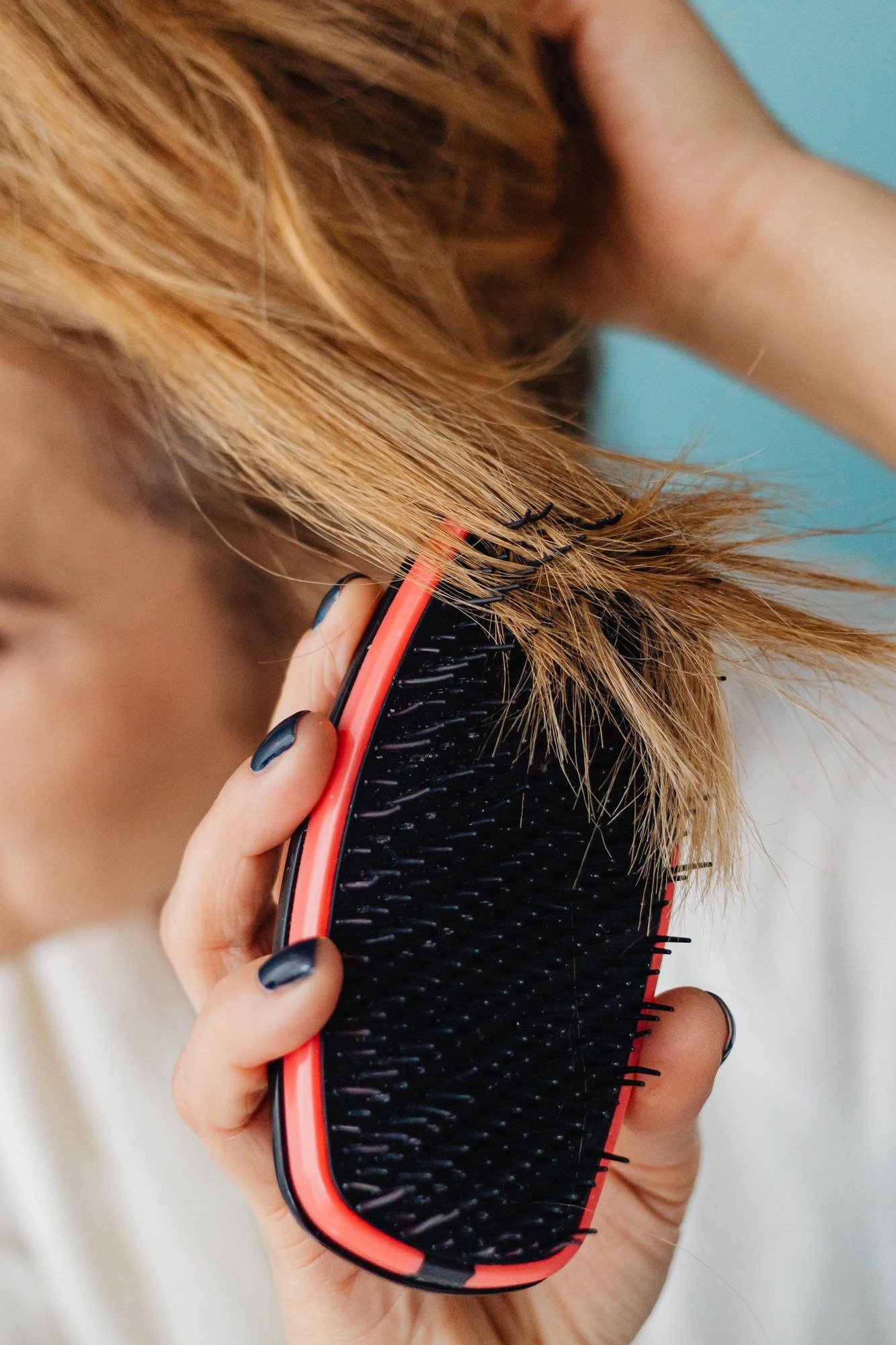
- Detangle gently, from the ends up. Start at the ends with a wide-tooth comb and move up only after each lower section is clear.
- Protect before heat. If you blow-dry or use hot tools, spray on a heat protectant first and avoid going over the same section twice.
- Seal the ends. Rub a drop or two of hair oil between your palms and smooth it over the ends only. This locks in moisture and tames flyaways.
Pro Tips
- Blot, never rub. Press water out with a soft T-shirt or microfibre towel instead of twisting or rubbing. Rubbing roughs up the cuticle and causes frizz and breakage.
- Wash less, but not too little. If your scalp gets oily, keep washing as often as you need to. The trick is making the wash gentler, not skipping it.
- Trim the damage. A mask can make a split end look neater, but it cannot reconnect the fibres. If the ends keep catching on your fingers, a small trim stops the split from travelling higher.
- Cover up outside. A silk-lined hat or a scarf over your hair in wind and cold protects it from friction and moisture loss.
- Sleep on silk. A silk or satin pillowcase causes far less friction than cotton, so you wake up with less tangling and fewer broken hairs.
Variations
- Fine hair: Use a light leave-in spray instead of a heavy cream, and apply oil only to the very ends. Heavy products flatten fine hair fast, so less is more.
- Curly or coily hair: Add a richer mask twice a week and a curl cream on damp hair. Curly hair is naturally drier because oils travel down the curl more slowly, so it needs more moisture, not less.
- Colour-treated hair: Use a colour-safe shampoo and conditioner, and add a bond-building treatment every week or two. Colour-treated hair is the most likely to need bond support in winter.
- Very damaged hair: Cut heat styling to a minimum, use a bond treatment weekly, and book a salon treatment such as K18 if the damage is severe. At-home care helps, but very damaged hair sometimes needs a professional treatment first.
- Oily scalp, dry ends: Shampoo the scalp well and keep conditioner and masks off the roots. The ends need the moisture, the scalp does not, and treating them separately solves both problems at once.
Frequently Asked Questions
How often should I wash my hair in winter?
As often as your scalp needs it. If your scalp gets oily, wash every day or every other day with a gentle, hydrating shampoo. Washing less does not moisturise your hair, and a dirty, itchy scalp is its own problem. The winter change is not the frequency, it is the gentleness: lukewarm water, a mild shampoo, and conditioner every time.
Can a hair mask really repair damage?
A mask can make damaged hair feel softer, look shinier, and tangle less, but it cannot repair a split end or reconnect broken fibres. Real repair comes from two things: bond-building treatments, which support the internal structure, and trimming away the damage that cannot be saved. Think of a mask as care and protection, not a cure.
Why does my hair get so static in winter?
Dry air is the cause. Cold outdoor air and heated indoor air both have very low humidity, so your hair loses moisture and builds up static charge. A leave-in conditioner, a drop of hair oil on the ends, and a silk pillowcase all help, and so does keeping indoor humidity between 30 and 50 percent with a humidifier.
Should I stop using heat tools completely in winter?
You do not have to stop, but you do have to protect. Always use a heat protectant, use the lowest temperature that gets the job done, and avoid passing over the same section more than once. If your hair is already snapping or feels straw-like, take a break from hot tools for two or three weeks while the mask and bond treatment do their work.
In Short
- Winter hair damage is a moisture and friction problem, so protect the hair and add moisture back.
- Wash with lukewarm water, condition every time, and use a mask once a week.
- Bond treatments give strength and conditioner gives softness, and damaged hair needs both.
- Detangle from the ends up, blot dry instead of rubbing, and trim split ends — no mask can reconnect them.
What is the one winter hair change that helped your hair most? Share it in the comments, and tell us what you want us to cover next.
Featured photo: Pexels 7320789 by kaboompics.com.