Classic New York Cheesecake (Dense, Creamy, Crack-Free)
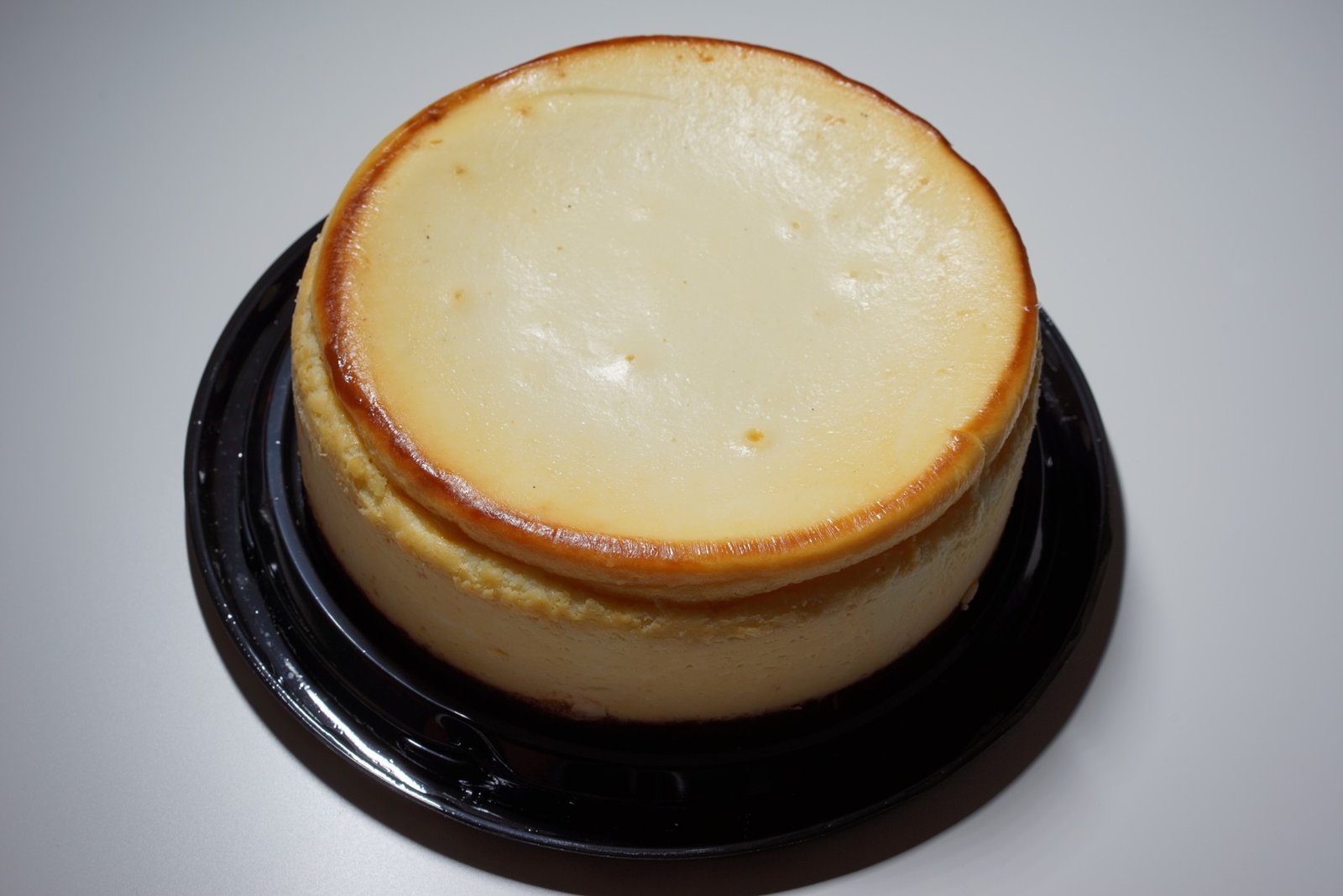
Classic New York cheesecake is the dessert that needs no topping, no drizzle, and no apology. It is tall, dense, and silky, with a pale golden top and a buttery graham crust, and it tastes like the famous bakery slices — rich cream cheese, a hint of lemon, and a texture that holds a clean cut. The method is not hard; it just asks for room-temperature ingredients, a water bath, and patience while it chills.
Serve it plain, exactly as it is, after a comfort-food dinner like Creamy Chicken Pot Pie or with a sweet baked side such as Cornbread Casserole on the table.
Why This Recipe Works
- Room-temperature everything: Soft cream cheese, eggs, and sour cream blend smooth with no lumps and less air beaten in.
- A water bath: Gentle, humid heat bakes the filling evenly and is the best insurance against cracks.
- Low, slow mixing: Beating on low and adding eggs one at a time keeps excess air out, so the cake does not puff and fall.
- Cooling in the oven: Leaving the cake in the turned-off oven lets it settle gradually instead of cracking from a sudden temperature drop.
Ingredients
- 1 1/2 cups (150 g) graham cracker crumbs
- 1/4 cup (50 g) granulated sugar, for the crust
- 6 tablespoons (85 g) unsalted butter, melted
- 32 oz (900 g) full-fat cream cheese, at room temperature
- 1 cup (200 g) granulated sugar
- 1/4 cup (30 g) all-purpose flour
- 1 teaspoon (5 g) fine salt
- 1 cup (240 g) full-fat sour cream, at room temperature
- 1 tablespoon (15 ml) lemon juice
- 1 teaspoon (5 ml) vanilla extract
- 4 large eggs, at room temperature
- 2 large egg yolks, at room temperature
(full list in card)
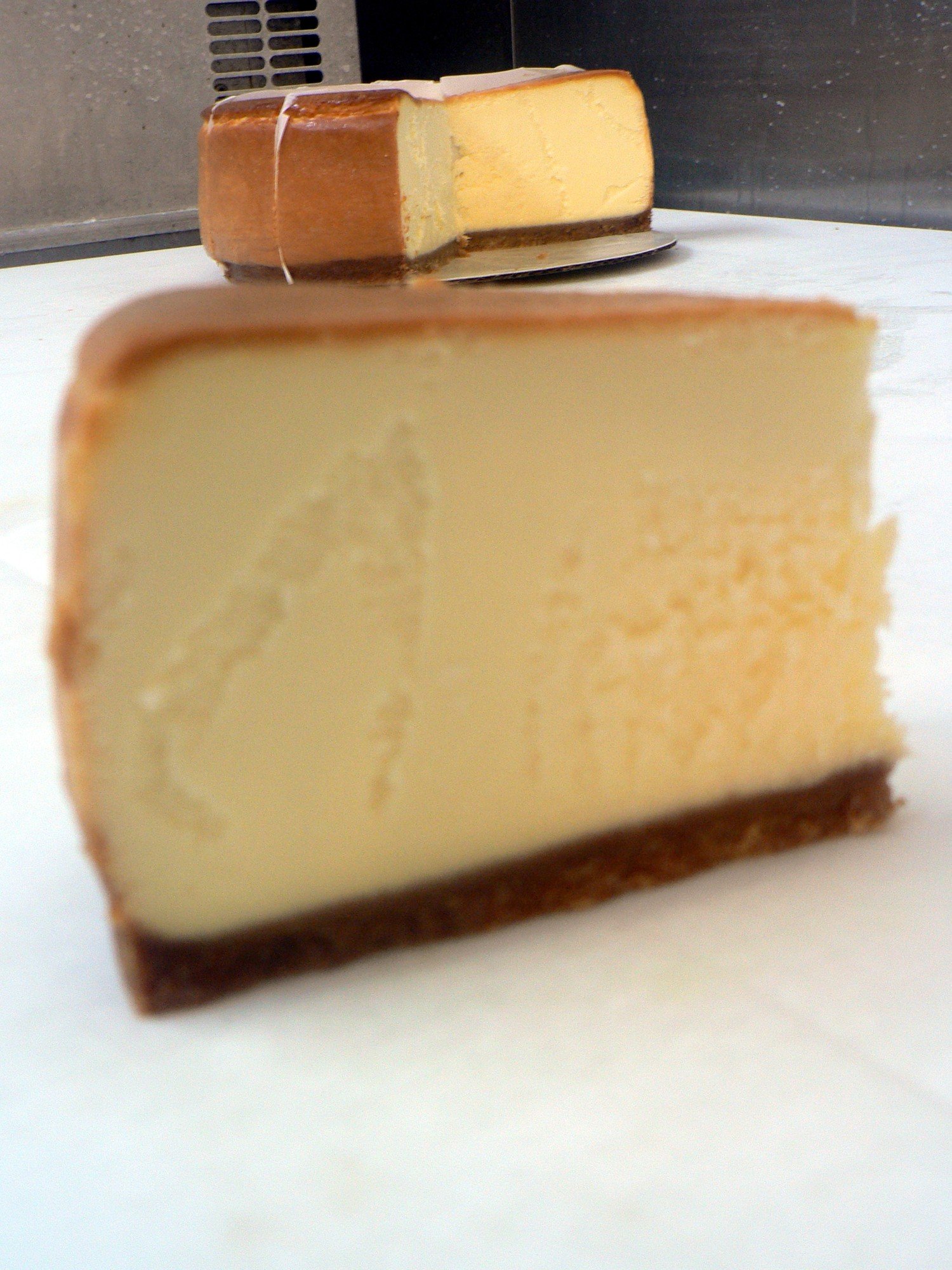
Photos: Plain New York-style cheesecake by Dllu, CC BY-SA 4.0, and Plain cheesecake slice by stu_spivack, CC BY-SA 2.0, via Wikimedia Commons.
How to Make Classic New York Cheesecake
Step 1: Make the crust
Heat the oven to 325 degrees F (165 degrees C). Mix the graham crumbs, sugar, and melted butter until sandy. Press firmly into the bottom and 1 inch (2.5 cm) up the sides of a 9 inch (23 cm) springform pan. Bake for 10 minutes, then cool. Wrap the outside of the pan tightly in 2 layers of foil.
Step 2: Beat the filling
Beat the cream cheese on low until completely smooth, about 2 minutes. Add the sugar, flour, and salt and beat on low until combined. Beat in the sour cream, lemon juice, and vanilla. Add the eggs and yolks one at a time, beating on low just until each disappears. Do not overbeat.
Step 3: Bake in a water bath
Pour the filling over the cooled crust. Set the foiled pan in a large roasting pan and pour in boiling water to come halfway up the sides. Bake for 60 to 70 minutes, until the edges are set and the center still wobbles slightly when gently shaken.
Step 4: Cool slowly, then chill
Turn the oven off, crack the door, and leave the cake inside for 1 hour. Remove, cool to room temperature, then cover and refrigerate for at least 8 hours, or overnight, before slicing with a hot, dry knife.
Tips
- Start with truly soft cream cheese: Cold cream cheese makes lumps that no amount of beating fixes. Leave it out for at least 1 hour.
- Check the foil wrap: A tight double wrap keeps water out of the crust; a leak makes a soggy base.
- Do not open the oven early: Peeking drops the temperature and can crack the top. Trust the wobble test at 60 minutes.
- Slice clean: Run a long knife under hot water, wipe dry, and repeat between cuts for bakery-clean slices.
Storage
Refrigerate the cheesecake, covered, for up to 5 days. Freeze whole or in slices, wrapped tightly in plastic wrap and foil, for up to 2 months; thaw overnight in the fridge. Do not leave it at room temperature for more than 2 hours.
Frequently Asked Questions
Why did my cheesecake crack?
The most common causes are overbeaten batter, too-hot oven, or cooling too fast. Beat on low, use the water bath, and let the cake cool gradually in the turned-off oven.
Can I make New York cheesecake without a water bath?
You can, but the texture will be a little less silky and cracks are more likely. If you skip it, bake at 300 degrees F (150 degrees C) and cool the cake very slowly in the oven.
What is the difference between New York cheesecake and regular cheesecake?
New York style is denser, taller, and richer, made with extra cream cheese and often a little sour cream, and it is served plain. Lighter cheesecakes use more eggs or whipped cream and are softer.
How do I know when the cheesecake is done?
The edges should look set while the center, about 3 inches (7.5 cm) across, still wobbles like jelly when you gently shake the pan. It firms up fully as it chills.
Classic New York Cheesecake
Course: DessertCuisine: American12
servings25
minutes1
hour10
minutes480
kcal1
hour35
minutesIngredients
1 1/2 cups (150 g) graham cracker crumbs
1/4 cup (50 g) granulated sugar, for the crust
6 tablespoons (85 g) unsalted butter, melted
32 oz (900 g) full-fat cream cheese, at room temperature
1 cup (200 g) granulated sugar
1/4 cup (30 g) all-purpose flour
1 teaspoon (5 g) fine salt
1 cup (240 g) full-fat sour cream, at room temperature
1 tablespoon (15 ml) lemon juice
1 teaspoon (5 ml) vanilla extract
4 large eggs, at room temperature
2 large egg yolks, at room temperature
Directions
- Heat the oven to 325 degrees F (165 degrees C). Mix the crumbs, sugar, and butter, press into a 9 inch (23 cm) springform pan, and bake 10 minutes. Cool, then wrap the pan in 2 layers of foil.
- Beat the cream cheese on low until smooth. Add the sugar, flour, and salt, then the sour cream, lemon juice, and vanilla. Beat in the eggs and yolks one at a time, on low, just until combined.
- Pour over the crust, set in a roasting pan, and add boiling water halfway up the sides. Bake 60 to 70 minutes until the edges are set and the center wobbles slightly.
- Turn the oven off, crack the door, and cool inside for 1 hour. Cool to room temperature, then refrigerate at least 8 hours before slicing with a hot, dry knife.
Notes
- Nutrition (estimated per serving): 480 calories, 32 g fat, 38 g carbohydrates, 1 g fiber, 30 g sugar, 9 g protein, 420 mg sodium. Values are estimates and will vary with the exact ingredients used.
- Photo credits: “Plain New York-style cheesecake” by Dllu, CC BY-SA 4.0; “Plain cheesecake slice” by stu_spivack, CC BY-SA 2.0.